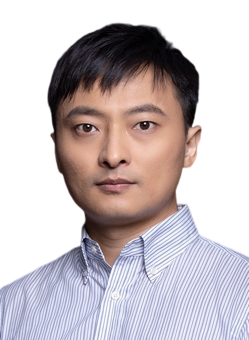
| Prof. Liang ZhaoDean of the School of Computer Science, CCF Senior Member Shenyang Aerospace University Biography: Liang Zhao, PhD, Professor & Doctoral Supervisor. Dean of the School of Computer Science, Shenyang Aerospace University; Director of Liaoning Key Laboratory of Large-Scale Distributed Systems. His long-term research focuses on vehicular mobile computing, digital twin and related fields. He has been listed in Stanford University's Top 2% Scientists Worldwide List for 2022-2024, and received numerous honors including Invited Fellow of the Japan Society for the Promotion of Science (JSPS), Awardee of the NSFC-European Commission Sino-European Talent Program, Academic Leader of Liaoning Province, Young Top Talent of Liaoning "Xingliao Talent Program", Young and Middle-Aged Scientific and Technological Innovation Talent of Shenyang, and Leading Talent of Shenyang. He has presided over more than 20 research projects, including the General Program, Young Scientists Fund Program and Sino-European Talent Program of the National Natural Science Foundation of China (NSFC), JSPS Invited Fellow Program, Key Program of the Natural Science Foundation of Liaoning Province, and Liaoning Applied Basic Research Program (Key R&D). He has published more than 150 papers in international conferences and peer-reviewed academic journals, including top-tier international journals such as IEEE TMC, IEEE JSAC, IEEE TON, IEEE TPDS. Title: Exploratory Research on Collaborative Computing for Multiple UAVs Oriented Towards the Low-Altitude Economy Abstract: This report focuses on the technological challenges of integrated air-space-ground systems for the low-altitude economy, conducting research around UAV networking and management, computing power optimization, collaborative deployment, and hybrid heterogeneous scenarios. In terms of networking and management, a secure routing scheme based on an improved artificial bee colony algorithm combined with blockchain is proposed, constructing a five-layer flying social network architecture and ensuring transmission and computing reliability through software-defined networking (SDN). For computing power optimization, an SDN-assisted computation offloading architecture and UVCO algorithm are designed, alongside the development of a DDPG-based adaptive emergency deployment scheme, integrating digital twins for dynamic trajectory planning. At the collaborative deployment level, wireless power transfer strategies are established, a GREEN energy efficiency maximization scheme is proposed, and energy-saving data collection and RIS-assisted coverage mechanisms are developed. Addressing hybrid heterogeneous scenarios, core challenges such as airspace planning are identified, and decentralized federated learning based on low-earth orbit satellites and region-partition adaptive offloading algorithms are proposed. Related outcomes support the low-altitude control platform in achieving device compatibility and digital twin interaction, laying a foundation for the large-scale application of the low-altitude economy. |

| Prof. Shuai WangNational-level Young Talent, IEEE/CCF Senior Member Southeast University Biography: Shuai Wang, Young Chief Professor, Southeast University. He is the recipient of the National Young Talent Program. His research focuses on the Internet of Things, big data, artificial intelligence, and related fields. In recent years, he has published over 100 papers in prestigious domestic and international journals and conferences, including Nature Cities, NSDI, MobiCom, SenSys, SIGKDD, RTSS, TMC, WWW, and TKDE (over 60 are CCF-A papers). He is the recipient of the Second Prize of the National Teaching Achievement Award, the First Prize of the Ministry of Education’s Scientific Research Outstanding Achievement Award, and eight Best/Outstanding Paper Awards from top-tier international conferences (e.g., RTSS). He serves as Program Chair, Publicity Chair, and Technical Program Committee (TPC) member for over ten leading international conferences. He currently serves on the editorial boards of multiple high-impact academic journals and acts as a peer reviewer. He is the Principal Investigator (PI) for multiple key national and provincial research projects, including the “New Generation Artificial Intelligence” Major Project under the National Science and Technology Innovation 2030 Program, the Key Project of the NSFC Joint Fund, and several other national-level research initiatives. Title: AI-Native IoT: The Evolution from Deep Integration to Native Intelligence Abstract: This talk presents the recent research progress of our group on"AI-Native IoT: The Evolution from Deep Integration to Native Intelligence." Specifically, the talk first discusses the progress in the deep integration of heterogeneous IoT, focusing on four dimensions: multi-modal fusion sensing, cross-technology communication under coexistence, deviceless edge computing, and multi-source data fusion analytics. Furthermore, the talk introduces the evolution of the research group's direction from the deep integration of heterogeneous IoT to the AI-Native IoT, and points out the cognitive limitations of existing artificial intelligence technologies in the digital space when applied to the physical space. By introducing the "AI-Native" paradigm, we aim to reshape the fundamental functions of physical information systems - including sensing, communication, and computing - through AI theory and Large Language Model (LLM) technologies. |
| Prof. Shaohua WanIEEE/ACM Senior Member University of Electronic Science and Technology of China Biography: Shaohua Wan (Senior Member, IEEE) received the PhD degree from the School of Computer, Wuhan University, in 2010. He is currently a full professor with the Shenzhen Institute for Advanced Study, University of Electronic Science and Technology of China. From 2016 to 2017, he was a visiting professor with the Department of Electrical and Computer Engineering, Technical University of Munich, Germany.His main research interests include edge AI and Accelerating AI. He is an author of more than 150 peer-reviewed research papers and books, including more than 50 IEEE/ACM Transactions papers such as IEEE Transactions on Mobile Computing, IEEE Journal on Selected Areas in Communications, IEEE Transactions on Wireless Communications, IEEE Transactions on Multimedia, ACM Transactions on Sensor Networks, ACM Transactions on Design Automation of Electronic Systems, ACM Transactions on Embedded Computing Systems, IEEE Transactions on Communications, etc., and many top conference papers in the fields of edge intelligence. Title: Edge AI for 6G Networks: Efficient Architectures and Collaborative Inference Abstract: This research focuses on accelerating AI deployment at the network edge through efficient model architectures, dynamic model partitioning, and collaborative inference frameworks within the context of 6G networks. To address the limitations of resource-constrained edge devices such as IoT, UAVs, and intelligent vehicles, the presentation highlights several key methodologies: Edge-Optimized Architectures: Introducing the CasMoE framework for efficient Mixture-of-Experts (MoE) inference on resource-limited hardware. Collaborative Inference Systems: Developing frameworks like MCIA and MEOCI that dynamically partition Deep Neural Networks (DNNs) across the cloud-edge-end continuum to optimize the tradeoff between latency and accuracy. Learning-Based Resource Orchestration: Utilizing deep reinforcement learning (DRL) to optimize task offloading and scheduling, achieving 20-40% latency reductions in dynamic network environments. The presentation also outlines future directions for 6G integration, emphasizing computing-aware networks for Large Language Models (LLMs) and space-air-ground integrated edge intelligence. |
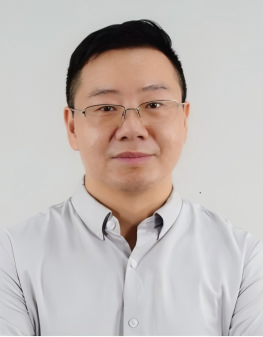
| Prof. Huawei HuangIEEE/CCF Senior Member Sun Yat-sen University Biography: Huawei Huang is a professor at Sun Yat-sen University and a dual-appointment professor at Lingnan College of SYSU. Since 2023, he has been consecutively recognized among the Top 2% Scientists Worldwide by Stanford University. His research interests include blockchain systems and protocols, blockchain finance protocols, and trusted infrastructure for AI agents. He has published numerous research papers in CCF-A journals and conferences such as IEEE/ACM ToN, JSAC, TPDS, TSC, TDSC, TIFS, TMC, TC, and INFOCOM. He has served as chair for many academic conferences, workshops, and symposiums. He has published three blockchain monographs, as well as a popular blockchain science book, namely "From Blockchain to Web3: building the next-generation Internet". Under his leadership, his team developed and open-sourced a blockchain experimental tool, BlockEmulator, which provides researchers a mature, high-quality experimental framework and code base. BlockEmulator has served researchers from over 90 countries and regions worldwide. Title: Blockchain Infrastructure for AI Agents Abstract: BrokerChain, a high-performance blockchain sharding protocol proposed by Prof. Huawei Huang's research group in 2022, addresses core challenges for blockchain sharding. In June 2025, his team launched BrokerChain's testnet, which is a real-world example of a public sharding blockchain. This testnet provides a research platform for academia and industry, supporting experiments in DeFi protocols, tokenization of real-world assets (RWA), and integration between AI and Blockchain. Its core features include EVM compatibility, low gas fees, high-efficiency intra-shard consensus, and user-friendly wallet software, significantly lowering barriers for developers and end users. This talk delves into BrokerChain Testnet's architectural design and technological innovations, as well as how BrokerChain offers an infrastructure for the turst layer of AI agents. |